Category Archives: Uncategorized
Aside

Why Game UI Design?

Why Game UI Design?

There is a lot of potential for design within mobile games and games in general. Having UI designers as a specific field for games is relatively new. In former years artist would do the visual aesthetics for the UI. Now UI game design is becoming more of a specialized field and companies are scraping the bottom of the barrel trying to find talent for their games.

There are so many gaming companies. A lot fail, but a lot will do quite well. But the opportunity to improve design skills at a gaming company will make you very valuable for the next opportunity.

Okay, so a lot of game UI is ugly.  A lot of gaming companies don’t care about the aesthetic of the UI as long as the UX functions well. Which, I can totally understand. But if a user is pleased visually their experience will improve greatly, making them want to come back. No one wants to stare at ugly graphics.

I didn’t intend to be a UI game designer. It just kind of happened. But the important part was that I was open to the opportunity. Looking at what was required for a game UI designer seemed to fit me well. It just felt and seemed right for more. Sometimes going with that gut instinct really does follow through to be a good choice. For me, it was.

The opportunities I see in game UI design, is the ability to have an affect aesthetically. My goal is a raise the bar higher and higher for game UI. Games can and are beautiful. Sometimes its not always easy to come by, but it’s becoming more respected and understood that it makes the entire game feel as one piece.

Plus the fun part of designing icons, laying out cool animations for menus, and all the other fun and creative things that go into building a game. Game UI should also feel like a game. Everything should be interactive, exciting and leave the player feeling like they are fully emerged in the experience. Game UX and UI should make the player feel like they have control of the flow of navigation. The more a player feels like they own the experience the more they will come back and take more ownership.

Making UX mistakes is always a good way to learn too. Sometimes what I think works doesn’t work for the user. But sometimes all there is go by is by testing! Test, test, test and test some more. I love getting feedback, opinions and trying to solve complicated questions that UX will hold. Then solving that problem and making it look visually pleasing. What awesome challenges that are encountered when being a UI game designer.

So if you’ve ever wondered why game UI? Well, these are some simple reasons.

  • Freedom in aesthetics
  • Creativity in icon design
  • Ability to improve user experience
  • Watching a game come to life
  • Working with a large team
  • Using illustrator as a primary tool
  • The freedom and ability to grow as a designer
  • The feeling of accomplishment when solving a large problem


Image

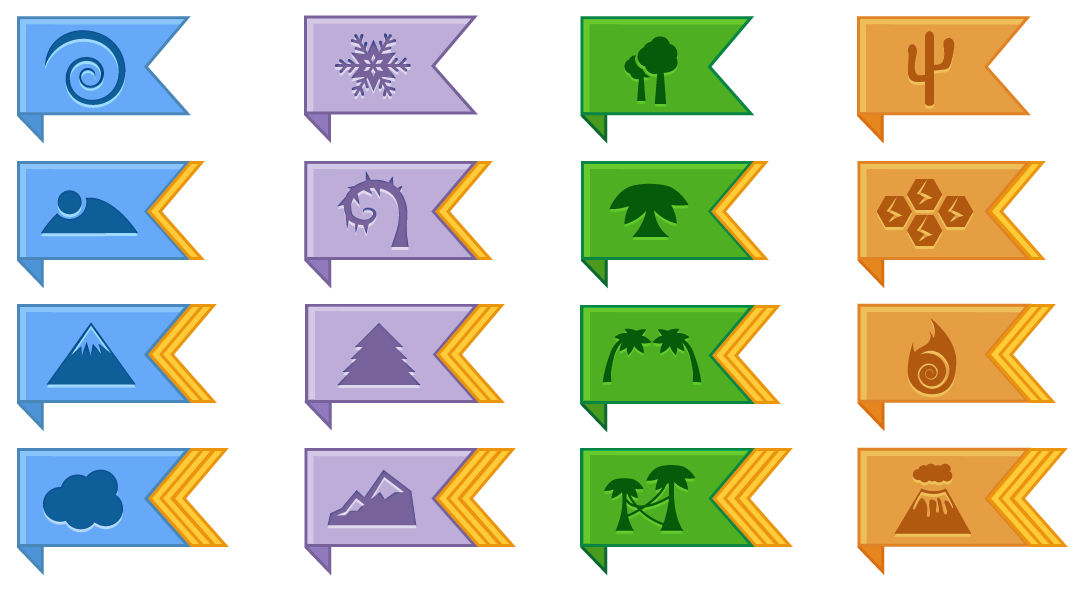
Tiny Village Dino Icons

Tiny Village Dino Icons

Even though some designs don’t always get pushed to a final project there are always great pieces that can go into my portfolio. Tiny Village did a feature for dinosaurs where each dino is attatched to a certain habitat. So above is a Air, Tundra, Forest and Desert. This was a fun project and I enjoyed spending time to make a lot of icons that were different! The feature is in the game and you should all check it out!

Aside

My Design Enemy: Myself

My Design Enemy: Myself

It’s almost like design has become stagnate to me. I look around and see all these talented designers, artists and I look at myself and feel that I am not growing. That everyone is swirling around with me with talent and knowledge yet I feel I know nothing. I start thinking to myself: when was the last time I really made something I loved? Not simply enjoying the design process, but also enjoyed the end result. I am my worst critic and I feel like I need to improve both in self esteem and have that urge to improve. For me it’s almost like seeing incredible talent stumps me. Instead of it making me feel more motivated, it makes me shrug back and think “I could never make that”. It’s a bad way of looking at things and I am working so hard to improve such a negative outlook. I fight with my inner self all the time. My mind is constantly at war with my heart. I know that I am a talented creative in my heart, but my mind chimes in and starts to discourage me. It’s almost as if my heart is the dreamer and my mind only thinks logically and cannot be creative. I am still young in my career and have so much room to grow. Yet I have seen myself grow so quickly since I’ve moved to SF. So I do know that I can make things happen. But sometimes I truly do struggle with myself. So what do I do about it?

  • I fight it. After moping around for a day or two, I get out of my slump and ask people I admire on how they create things. I am only going to get better with practice and by learning from the best.
  • I suck it up. Getting over myself and looking forward is so hard to do!
  • I think about my dreams. Focusing on the future and my ambitions gets me out of the pity party rut and keeps me moving forward.
  • I surround myself with people who encourage me. I hang out with people who encourage me. I avoid those people who try to bring me down on every little thing that I do. I spend my time with people who have the same dreams and ambitions as me and lead a healthy and beautiful life. Being surrounded by people like this makes me want to live a life like that and lead by example.
  • I start my own projects. I have one project in the works right now that I have been enjoying working on. It’s been slow moving but I hope to release it this summer. Fingers crossed! Hint: Fashion & iOS

I’m far from perfect. I make mistakes everyday. But life is about battling inner demons and learning to grow and get better at the challenges that I face. I love life and I love people. Conquering this inner enemy will pull me closer to the dreams and missions that I have in my life.

What do you struggle with when designing? Do you find yourself battling the inner negative voice that says what you can’t do? If so, how do you rise above it?

Follow my blog with Bloglovin

Aside

Building Your Online Identity

Building Your Online Identity

I’ve written before on how to protect your online identity. But I want to go back a little bit and write on how you can build a solid foundation for your online identity. This tips will even be key in protecting yourself against online identity fraud.


Domains

  • Buy more than one domain for your site. I would recommended buying .com , .net, .co and .uk for a start. It’s good to cover all your bases when building your online identity. It will also protect you from future identity fraud.
  • Purchase your full name for a domain. People will remember you better by your name, than by some nickname or a “Design Studio” name. Unless you truly do own a design studio and have people working in it, it’s better to just use your own name. People have to memorize names all day, so were more programmed to remember a persons name, than a studios.


Name Consistency

  •  Whatever name you use, make it consistent with every account name you have online. It will make it easier for people to find you and also to remember you.
  • Having an identity that is consistent with your brand name allows yourself to be more marketable in the future for guest articles and public events.


Your Image

  • Use 0ne Favicon that you can use on your website, small pieces of artwork and anything else you want your “Brand” to go onto.
  • One professional image. An image that represents your smiley face, with a non distracting background. Wear something that  you would wear to an interview for the photo.
  • Casual  photos are  important too. It makes everyone know you’re a laid back person and it also makes you more approachable online.
  • Decide what kind of image you want to depict to people around you. Who you are targeting and what you are doing. That will help you define your physical online image, and just an image of  yourself as a whole.
  • Your words will also depict what kind of image you want to portray, so be careful.


Protecting Your Online Accounts

  • Use long passwords, with a capital letter and numbers.  The more complicated the password, the less likely it will be hacked.
  • Be careful about what services you allow to connect through Twitter OR Facebook. You never truly know what kind of information they will be collecting. Also, a lot of services will send out automated DM’s about their service through you.  Super annoying.
  • Login often. This will help to make sure your account isn’t being hacked and it’s good to look active on your social media accounts.


What are ways that you build your identity online to have people remember you? 


Aside

The Lost Treasure – Experimenting with Design

The Lost Treasure – Experimenting with Design

Style and technique is what makes a good designer distinguished and recognizable. It’s our practice of form and function.

The client sees your past works, decides to work with you, and has certain expectations from your previous work as well as their own dreams.

Since I haven’t work with clients in web design, I can only assume what is happening. My perspective is coming from the process of critiquing my friends’ site designs as well as defending my very own works for the next version of Resimplify.

In every conversation the debate between “what works” versus experimentation comes up. I side with experimentation.  We know that form follows function, but how that is practiced lies my argument. Those that choose “what works” are basing their design on previous forms. And those, like myself, that choose experimentation base their design by focusing on the function and figuring out the appropriate form.

The fundamental of form and function is so basic in design that the value it teaches is undervalued in the practice amongst the masses. Why?

First off, I hope we all like to design due to our love for creating a better world in terms of form and function, but money and common practices might be effecting our practice.

I don’t want you to get the idea that “what works” is designing for what is right and comfortable and that experimentation is so far fetched but worth trying. I’m simply saying that designers are doing more of what works as opposed to experimenting with the form and function.

During my casual conversations amongst my friends I tend to be the one giving reasoning to why I made the design the way I did. And usually after a few minutes of talking it out they understand. On the other hand many designers would shy away from doing this and just going after what works so the reasoning and explanation is clear or obvious.

I’m a firm believer that the traditions and practices of what works are interfering with designing for the client, the community, and building something truly great and magical.

When you look at people saying, where is your email sign up form, your navigation text, and your responsive design what they really are saying is where is your logo?

Rather than focusing on what would make a better design they are focused on what is a common practice and should be there. I do believe having an email sign up form and responsive design are good elements to think about and possibly include, but for the reasons of function rather than trending form.

Louis Sullivan, Frank Lloyd Wright, and Jony Ive just to name a few have believed in a certain vision and paved forward even though at first the designs seem a bit outlandish at the time. Today, they are highly respected.

I love design because of how creativity and personality can be combined together to create something useful and magical. I’m one that looks to see how certain elements can be shaped to create the right voice and personality that the company, site, or client needs.

It’s all in the reasoning. A short hidden reasoning isn’t the goal. It’s not my goal and I choose to put my efforts in function, not form.  Remember good design requires both during the process through experimentation, not just by doing what works.

This is why I began and continue to design. I like to think and give hidden reasoning. Do you? And if so, is that reflected in your work?

 About the writer:
Derek Jensen is a UI Designer and the Editor-in-chief of Resimplify. He also has his own website, which he posts interesting links and quotes on a more personal but still design focused level. You can also check out his Dribbble page, which has more of a clean and print like aesthetic. I appreciate Derek taking the time out of his day to write an original article for my site and doing so without flaw!